Things to do in Skopje
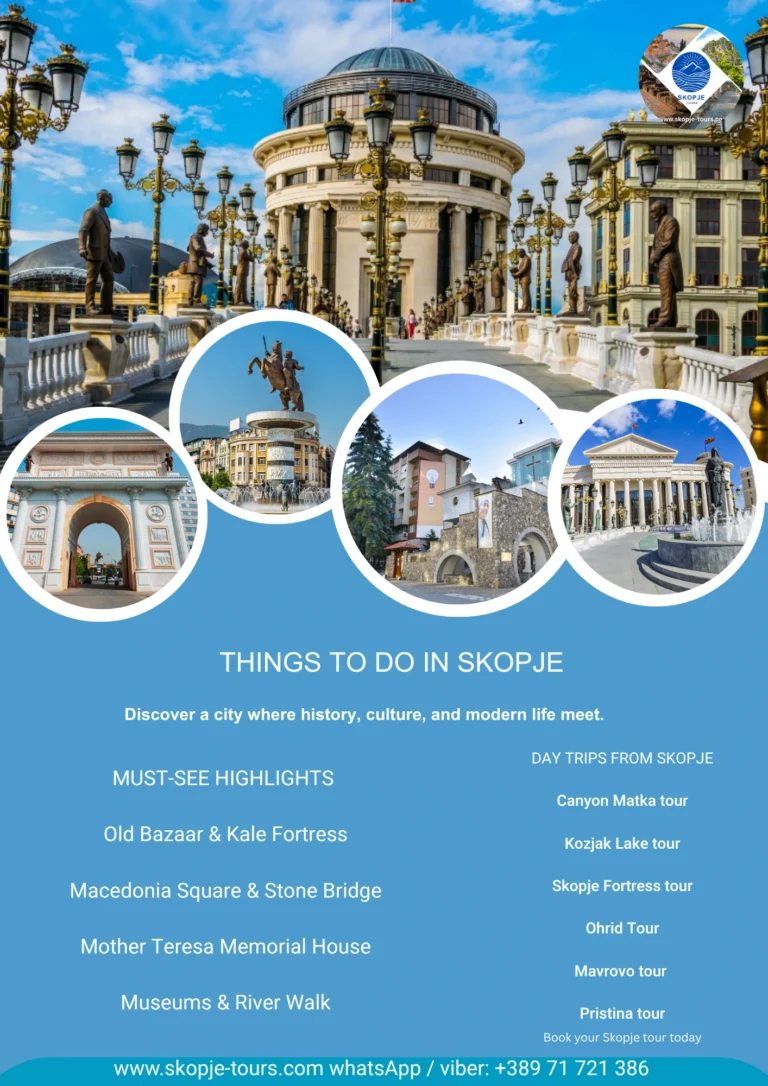
Things to do in Skopje? Discover top attractions, private tours, hidden gems, and unforgettable day trips from Skopje. Book guided experiences with local experts and explore the capital of North Macedonia like never before.
Things to do in Skopje
Why Visit Skopje?
If you are planning a trip to the Balkans, you may be asking yourself: Is Skopje worth visiting? The answer is absolutely yes. As the capital of North Macedonia, Skopje offers a unique combination of history, culture, architecture, and natural beauty that is difficult to find anywhere else in the region. Unlike many European capitals that focus on a single historical period, Skopje showcases layers of history that span from ancient times through the Ottoman era, the Yugoslav period, and modern-day North Macedonia.
As the capital of North Macedonia, Skopje serves as the country’s political, cultural, and economic center. It is also the largest city in the country and the perfect starting point for exploring the rest of North Macedonia. Visitors can experience centuries of history while enjoying modern cafes, restaurants, museums, and vibrant city life. The city is compact and easy to explore, making it ideal for both short visits and longer stays.
One of the top attractions in the city is the famous Old Bazaar, one of the largest and best-preserved Ottoman bazaars in the Balkans. Walking through its narrow cobblestone streets feels like stepping back in time. The area is filled with traditional shops, artisan workshops, mosques, tea houses, and local restaurants. The Old Bazaar remains a living part of the city rather than simply a tourist attraction, allowing visitors to experience authentic local culture and daily life.
Skopje’s rich Ottoman history can be seen throughout the city. For more than five centuries, the Ottoman Empire shaped the development of Skopje, leaving behind remarkable landmarks that still stand today. Historic mosques, hammams, stone bridges, and caravanserais provide insight into this important period. The famous Stone Bridge, which connects the city center with the Old Bazaar, is one of the most iconic symbols of Skopje and a reminder of its Ottoman heritage.
At the same time, Skopje presents a fascinating contrast through its distinctive communist architecture. Following the devastating earthquake of 1963, much of the city was rebuilt during the Yugoslav era. Visitors can see impressive examples of Brutalist and modernist architecture that reflect the city’s socialist past. Buildings such as government institutions, cultural centers, and residential blocks create a unique urban landscape that attracts architecture enthusiasts from around the world. This combination of Ottoman heritage and communist-era design gives Skopje a character unlike any other European capital.
Beyond its urban attractions, Skopje is also an excellent destination for those who enjoy nature and outdoor activities. The city is surrounded by mountains, rivers, and scenic landscapes that are easily accessible from the center. Mount Vodno rises above the city and offers spectacular panoramic views. Visitors can hike through peaceful forest trails or take a cable car to the Millennium Cross, one of the most recognizable landmarks in North Macedonia.
Perhaps the greatest natural attraction near the city is Matka Canyon, located just a short drive from Skopje. This stunning canyon is considered one of the most beautiful places in North Macedonia and is often the highlight of a visitor’s trip. Surrounded by steep cliffs and crystal-clear waters, Matka Canyon offers opportunities for boat tours, kayaking, hiking, and cave exploration. The canyon is home to diverse wildlife, medieval monasteries, and the famous Vrelo Cave, one of the deepest underwater caves in Europe. Whether you are seeking adventure or relaxation, Matka Canyon provides an unforgettable experience.
So, is Skopje worth visiting? For travelers looking to discover a destination that combines history, culture, architecture, and natural beauty, Skopje is an excellent choice. From exploring the Old Bazaar and Ottoman landmarks to admiring communist architecture and visiting the breathtaking Matka Canyon, the city offers experiences that appeal to every type of traveler. Skopje remains one of the Balkans’ most underrated capitals, making it a rewarding destination for those seeking something different from the typical European city break.
Best Things to Do in Skopje at a Glance
If you're wondering how much time you need to explore the main attractions, this quick guide highlights the best things to do in Skopje and the average time required for each location. Whether you're visiting for one day or a weekend, this table will help you plan your Skopje itinerary efficiently.
| Attraction | Time Needed |
|---|---|
| Stone Bridge | 15 min |
| Old Bazaar | 2 hours |
| Macedonia Square | 30 min |
| Skopje Fortress (Kale) | 1 hour |
| Memorial House of Mother Teresa | 45 min |
| Mustafa Pasha Mosque | 30 min |
| Skopje Aqueduct | 45 min |
| Ancient Scupi | 1 hour |
| Mount Vodno & Millennium Cross | 3 hours |
| Matka Canyon | Half Day |
| Macedonian Village | 1–2 hours |
| Museum of the Macedonian Struggle | 1–2 hours |
Best Day Trips from Skopje
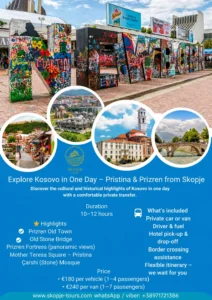
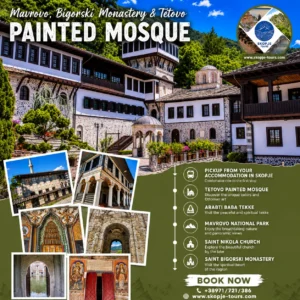
Skopje is the perfect base for exploring North Macedonia. Popular day trips include Matka Canyon, Ohrid, Mavrovo National Park, Kosovo, Prizren and several hidden gems around the capital such as Kozjak Lake, Marko Monastery and the ancient settlement of Tumba Madžari.
Recommended Tours for First-Time Visitors
If you want to experience the best attractions in and around Skopje with private transportation and a local guide, we recommend:
Why Choose a Private Tour?
A private tour allows you to explore Skopje at your own pace while discovering hidden locations that many tourists miss. Enjoy flexible itineraries, comfortable transportation and local insights from experienced guides.
Things to Do in Skopje in One Day
If you only have one day in Skopje, start at Macedonia Square, walk through the Old Bazaar, visit Kale Fortress, explore the Skopje Aqueduct and finish your day at Matka Canyon.
Suggested Skopje Itinerary
Tour Itinerary
Pickup Location
Hotel, Airbnb, apartment or any address in Skopje.
Matka Canyon
Explore Matka Canyon, optional boat ride to Vrelo Cave and free time for sightseeing.
Macedonian Village
Traditional Macedonian architecture and local heritage.
St. Panteleimon Monastery
Visit the famous monastery in Nerezi with unique Byzantine frescoes.
Ancient Scupi
Discover the archaeological remains of the ancient Roman city.
Roman Amphitheatre
Explore the ancient Roman amphitheatre and historical site.
Skopje Aqueduct
Photo stop and sightseeing at one of Skopje's most unique landmarks.
Kale Fortress
Panoramic views over Skopje and guided sightseeing.
Old Bazaar
Walk through the largest and most famous bazaar in the Balkans.
Macedonia Square
End of the tour in the heart of Skopje.
One Day in Skopje: The Ultimate First-Time Visitor Itinerary
If you only have one day in Skopje, the best way to experience the city is through a circular route that combines nature, archaeology, Byzantine heritage, Ottoman history, and the modern city center. This itinerary allows visitors to see many of Skopje’s most important attractions in a single day.
Morning: Mount Vodno and Millennium Cross
Take the cable car to Millennium Cross, one of the largest crosses in the world.
Enjoy panoramic views over Skopje and the surrounding mountains. The cable car isn’t working, out of service.
Macedonian Village and St. Panteleimon Monastery
Start your day on the slopes of Mount Vodno at the traditional Macedonian Village complex.
Continue to the Church of St. Panteleimon in Nerezi, one of the most important medieval churches in the Balkans. Built in 1164, it is famous for its remarkable Byzantine frescoes, considered masterpieces of medieval art.
Church of St. Panteleimon in Nerezi
The church is considered one of the most important examples of Byzantine art in Europe.
Its frescoes predate many Renaissance masterpieces and attract historians and art lovers from around the world.
Continue to Matka Canyon
After Nerezi, head toward Matka Canyon, one of the most visited attractions in North Macedonia.
Surrounded by dramatic cliffs, monasteries, and emerald-green waters, Matka Canyon offers breathtaking landscapes just a short drive from Skopje. Visitors can enjoy walking trails, boat rides, and spectacular viewpoints.
Relax at Matka Canyon
Spend more time hiking, kayaking, or taking a boat trip to Vrelo Cave.
For travellers who want to experience Matka Canyon together with Skopje’s most important historical sites, our private tour follows this complete circular route.
Suggested Skopje Itinerary
Hidden Gems in Skopje
Many visitors only see Macedonia Square and the Old Bazaar. However, some of Skopje’s most fascinating places remain hidden from the typical tourist route.
Discover Ancient Scupi and the Roman Amphitheatre
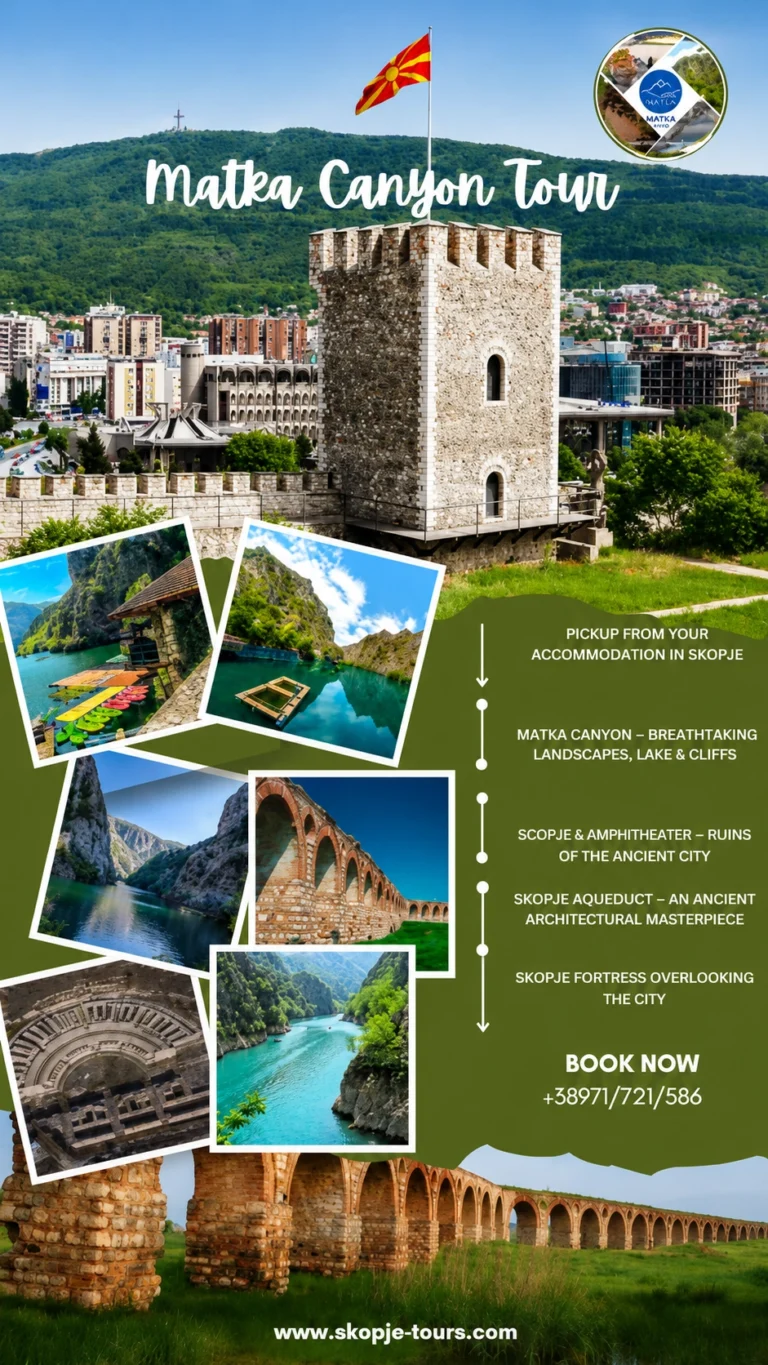
The next stop is Ancient Scupi, an important Roman and Byzantine settlement that existed centuries before modern Skopje.
Visitors can explore archaeological remains including streets, basilicas, baths, and the ancient amphitheatre while learning about the city’s rich past.
Visit the Skopje Aqueduct
Skopje Aqueduct
The Skopje Aqueduct is one of the city’s most underrated attractions and one of the few preserved aqueducts in the Balkans.
Continue to the Skopje Aqueduct, one of the most mysterious historical monuments in the Balkans.
Its impressive stone arches have survived for centuries and remain one of Skopje’s most fascinating hidden attractions.
Explore Kale Fortress
The journey continues to Kale Fortress, the historic stronghold overlooking the city.
From the fortress walls, visitors can enjoy panoramic views of the Vardar River, Old Bazaar, and modern Skopje skyline.
Afternoon: Old Bazaar and Ottoman Heritage
After descending from Kale Fortress, enter the Old Bazaar, one of the largest and best-preserved Ottoman bazaars in Southeast Europe.
Walking through its narrow streets often feels like stepping into old Constantinople.
Highlights include:
Mustafa Pasha Mosque
Daut Pasha Hamam
Suli An
Church of the Holy Saviour
Traditional artisan workshops
Evening: Macedonia Square and the Modern City Center
Finish your day in Macedonia Square, the heart of modern Skopje.
Walk across the Stone Bridge, admire the monuments, fountains, museums, and enjoy dinner in Debar Maalo.
By the end of the day, you will have experienced the natural beauty, Roman heritage, Byzantine history, Ottoman architecture, and modern identity that make Skopje one of the most fascinating capitals in the Balkans.
Two Days in Skopje
If you have two days in Skopje, spend the first day following the itinerary above and dedicate your second day to panoramic views and nearby natural attractions.
Pickup Location
Your hotel, Airbnb, apartment, or any address in Skopje.
Transportation
Travel comfortably by private car or van depending on your group size.
(Approx. 20-minute drive)
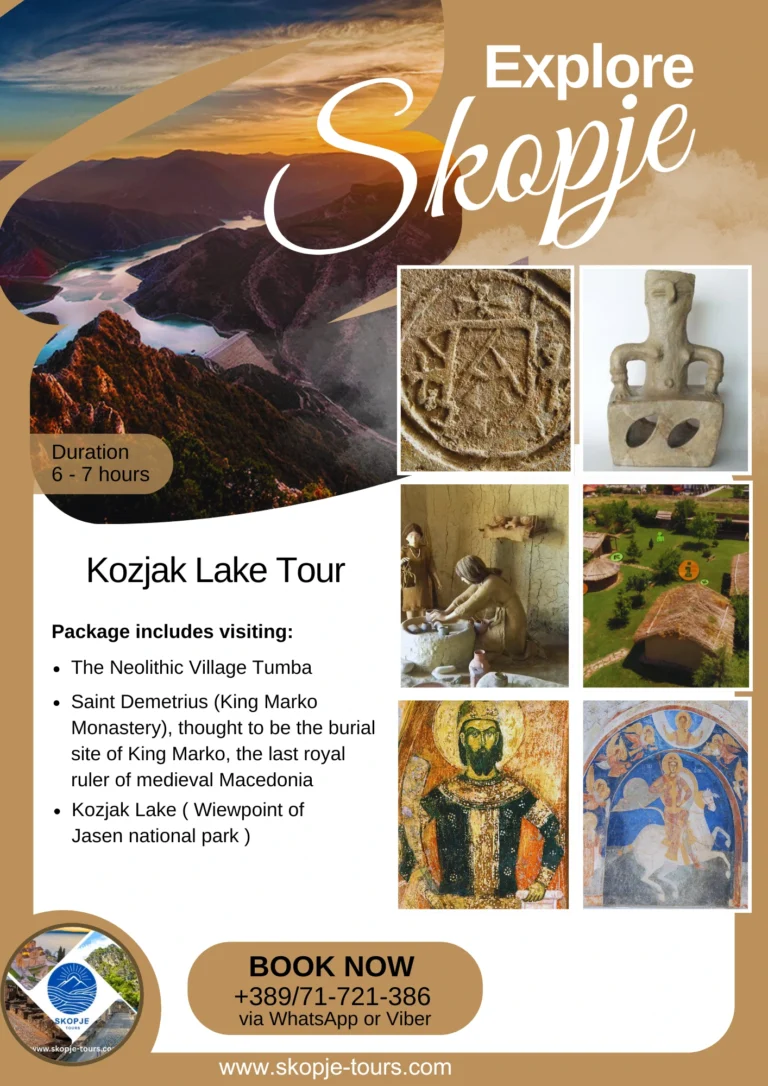
Tumba Madžari
Visit one of the most important Neolithic archaeological sites in the Balkans.
Guided visit, photo stop, and free time.
(Approx. 30 minutes)
Archaeological Village
Explore reconstructed prehistoric houses and discover how people lived over 8,000 years ago.
Guided tour, sightseeing, and photography.
(Approx. 30 minutes)
Marko Monastery
Discover the beautiful 14th-century monastery famous for its medieval frescoes.
Guided visit, free time, and panoramic views.
(Approx. 45 minutes)
Kozjak Lake
Enjoy breathtaking views of the lake surrounded by mountains and untouched nature.
Photo stop, sightseeing, relaxation, and free time.
(Approx. 1 hour)
Return to Skopje
Comfortable drive back to your hotel or preferred location in Skopje.
Tumba Madzari Archaeological Village
A Glimpse into Neolithic (Stone Age) Life
You can step back more than 8,000 years into Macedonia’s Neolithic ( Stone Age) past. The site brings life vividly to life through both original archaeological remains and faithful reconstructions.
Marko Monastery
Located in a peaceful natural setting south of Skopje, Marko Monastery is famous for its medieval frescoes and beautiful surroundings.
It remains one of the least-visited historical sites near the capital.
Kozjak Lake
Kozjak Lake is one of the most spectacular natural locations near Skopje.
Surrounded by mountains and breathtaking viewpoints, it remains largely undiscovered by international tourists.
Recommended Tours for First-Time Visitors
If you want to experience the best attractions in and around Skopje with private transportation and a local guide, we recommend:
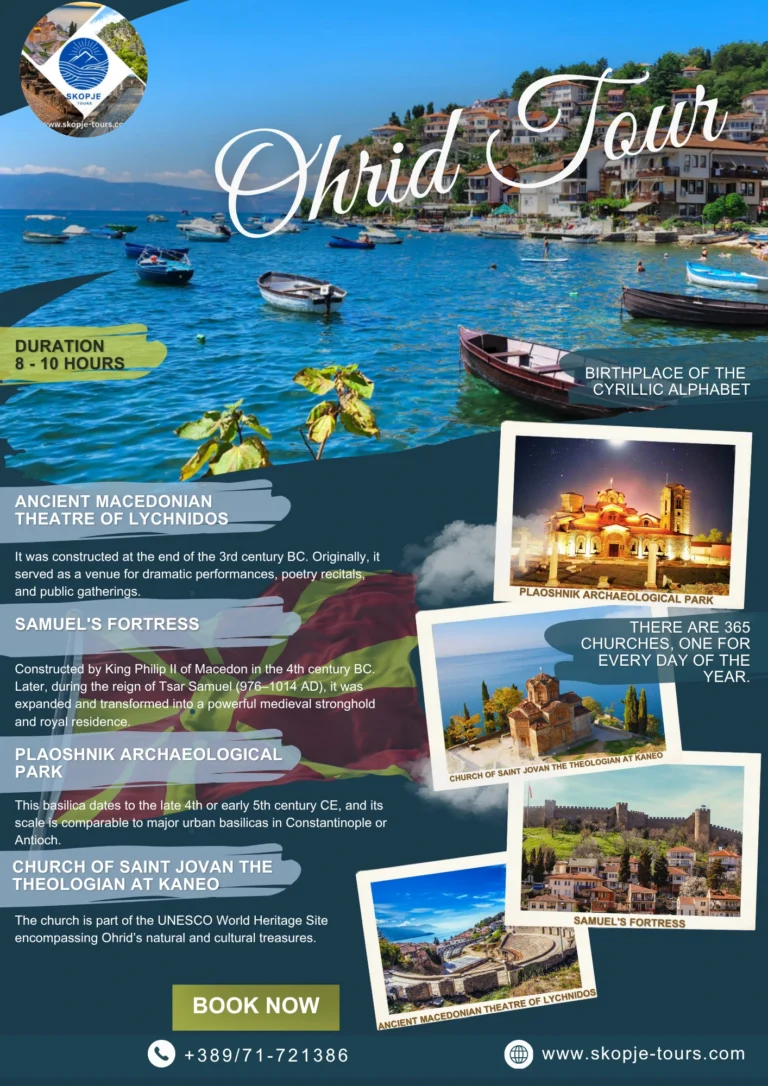
Ohrid Day Trip from Skopje
Experience the magic of Ohrid, the cultural and historical jewel of North Macedonia, on this unforgettable day trip from Skopje. Nestled on the shores of the breathtaking Lake Ohrid, this UNESCO World Heritage Site is renowned for its ancient churches, rich history, stunning landscapes, and unique atmosphere. Wander through the charming old town, admire centuries-old architecture, and discover important landmarks such as Plaošnik and the iconic Church of St. John Kaneo, dramatically situated on a cliff overlooking the crystal-clear waters of the lake. With its combination of history, culture, nature, and spectacular panoramic views, Ohrid offers a truly authentic Balkan experience and is considered one of the most beautiful destinations in Southeast Europe. This tour is perfect for travelers seeking to explore North Macedonia’s most famous attraction in comfort and style.
Contact us on WhatsApp or email us to book your tour and get more information.
💬 Chat on WhatsAppor email us at toursskopje@gmail.com
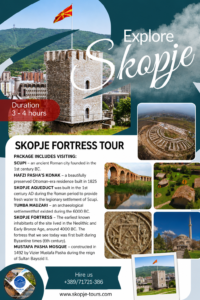
Day Trips from Skopje
Map of Top Attractions in Skopje
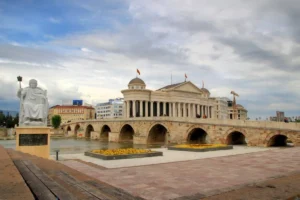
Skopje Stone Bridge
Built between 1451 and 1469, it stands on older Roman, Christian, and medieval foundations from the time when Stefan Dušan was crowned and resided in Skopje.
It is traditionally linked to Sultan Mehmed II. In 1689, after the failed Karposh Uprising, the revolutionary Karposh was executed on the bridge.
In 1944, retreating fascist German forces attempted to destroy it. But Macedonian Partisan resistance and local citizens prevented its demolition. Today, the bridge stands as a lasting symbol of Skopje’s endurance and history.
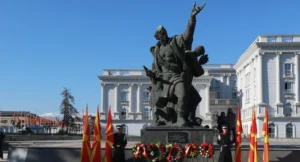
Monument to Skopje's Liberators
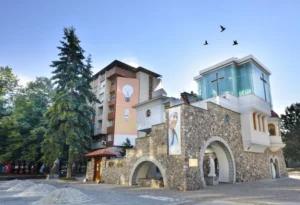
Memorial House of Mother Teresa
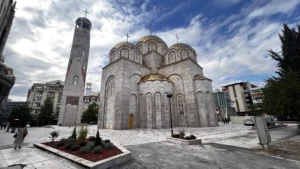
Church of Sts. Constantine and Helena
Constantine the Great, Roman Emperor (Imperator), and Saint Helena, his mother, legalised Christianity, strengthened its spread, and laid the foundations of the Christian world.
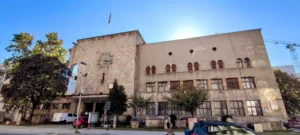
The Old Railway Station(Museum of Skopje)
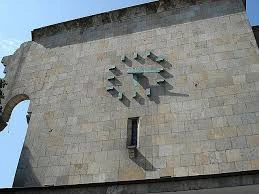
The clock, 05:17, forever stopped at the moment of the devastating 1963 earthquake, serves as a moving reminder of Skopje’s resilience.
Nearly 80% of the city was destroyed, leaving over 200,000 people homeless, and about 1,070 people lost their lives—a tragedy that forever changed the city, but also marked the beginning of its remarkable rebirth
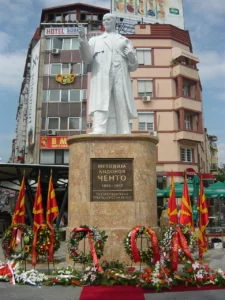
The monument of Методија Андонов-Ченто, the first President of modern Macedonia
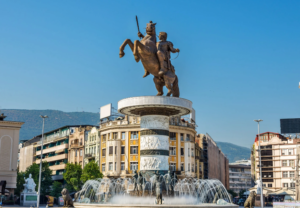
Alexander the Great Statue
Alexander the Great (Alexander III of Macedon) was one of the most famous military leaders in history.
He was born in 356 BC in Pella. He was the son of Philip II of Macedon and Queen Olympias.
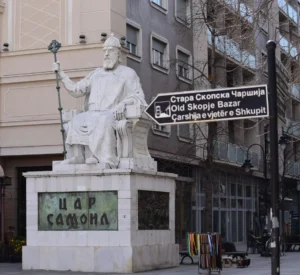
Tsar Samuil Statue
Tsar Samuil (976–1014) ruled a powerful medieval state in the Balkans at the end of the 10th century.
Ohrid was one of his main capitals and an important political and spiritual center of his realm. The city later became the seat of the Ohrid Archbishopric
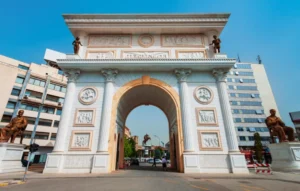
Macedonia Gate
The Porta Macedonia is a triumphal arch constructed in 2012 to honor 20 years of Macedonian independence.
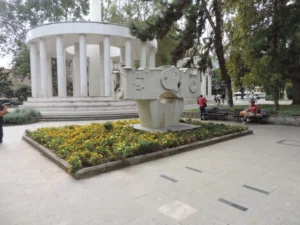
Woman-Warrior Park
Zena Park is a small central park in Skopje near the Parliament and Macedonia Square, known for its white circular colonnade, landscaped gardens, and several monuments dedicated to fallen soldiers.
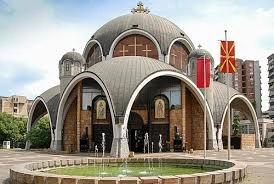
Archbishop Cathedral „St. Clement of Ohrid”
The Cathedral of St. Clement of Ohrid is the largest cathedral of the Macedonian Orthodox Church, renowned for its impressive architecture, massive central chandelier, and beautifully decorated interior filled with vibrant icons.
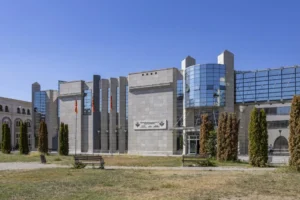
Holocaust Memorial Center for the Jews of Macedonia
It’s a deeply moving and authoritative museum dedicated to the centuries-long history of Jews in Macedonia, with a strong focus on the Holocaust. The museum documents the lives of Macedonian Jews before WWII, their cultural and economic contributions, and the devastating deportation of 7,144 Jews in 1943 to the Treblinka extermination camp—almost the entire Jewish population of the region.
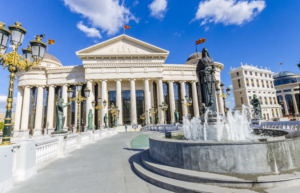
Archaeological Museum of the Republic of Macedonia
Rising prominently along the banks of the Vardar River, the Archaeological Museum of North Macedonia is one of Skopje’s most striking landmarks. The grand, neoclassical-style building houses a vast collection spread across two floors, showcasing artifacts from prehistoric times through the Roman and Byzantine periods.
Visitors can explore rows of traditional glass display cases filled with statues, jewelry, weapons, coins, and everyday objects that reveal the region’s deep and layered history. While the museum’s presentation feels old-fashioned in places, its sheer scale and richness make it an essential stop for history lovers and curious travelers seeking to understand the cultural roots of North Macedonia.
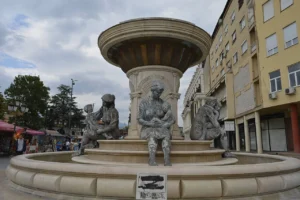
Fountain Olympia - Mother of Alexander III Of Macedonia
Beyond the Stone Bridge, in front of the Monument to Philip II, a fountain depicts tender scenes of motherhood—women embracing their children and a pregnant woman—symbolising life, care, and continuity.
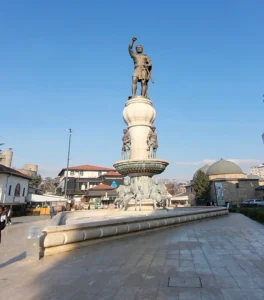
Philip II of Macedon Statue
Philip II of Macedon was a powerful king who strengthened the Macedonian army and defeated Athens and Thebes, making them submit to his rule before his son, Alexander the Great, became king.
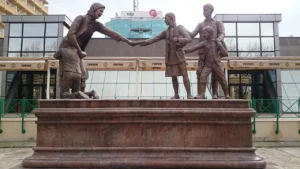
Monument to the Child Refugees from Aegean Macedonia
Monument of the child refugees from the civil war in Aegean Macedonia. War for ethnic cleansing of the minority’s.
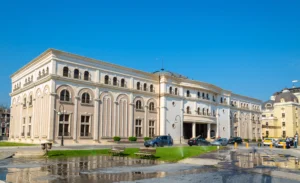
Museum of the Macedonian Struggle for Independence
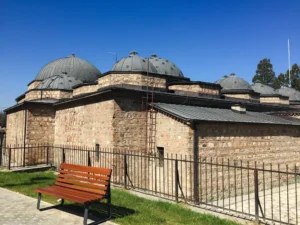
National Gallery (Daut Pasha Hamam)
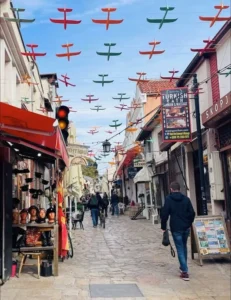
Old Bazaar, Skopje
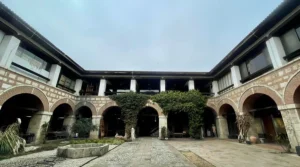
Historical Museum and Art Gallery - Suli Ann (Inn)
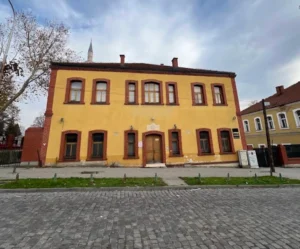
Old Skopje Telegraf and Post Office
It played a key role in the development of postal and telegraph services in Skopje, connecting the city with other parts of the Ottoman Empire and beyond.
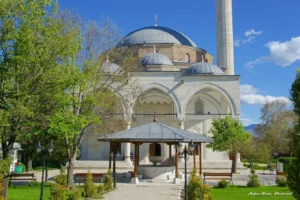
Mustafa Pasha Mosque
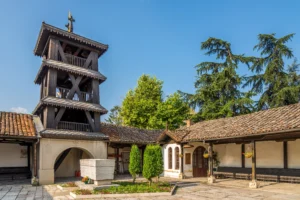
Church of the Ascension of Jesus (Sv. Spas)
Travel Information & Safety for North Macedonia
Useful ATM Locations in Skopje for Tourists
Things to Do in Skopje - Frequently Asked Questions
What are the best things to do in Skopje?
The best things to do in Skopje include visiting the Stone Bridge, exploring the Old Bazaar, seeing the Alexander the Great statue in Macedonia Square, touring Matka Canyon, and discovering Skopje Fortress. Many visitors also enjoy guided walking tours and day trips to nearby lakes and mountains.
Is Skopje worth visiting?
Yes, Skopje is absolutely worth visiting. The city offers a unique mix of Ottoman heritage, ancient history, modern architecture, and vibrant local culture. It is also an affordable European destination with great food and friendly locals.
How many days do you need in Skopje?
Most travelers spend 2 to 3 days in Skopje. This gives you enough time to explore the main attractions, visit museums, enjoy the Old Bazaar, and take a day trip to Matka Canyon or Kozjak Lake.
What is Skopje famous for?
Skopje is famous for the Stone Bridge, the large Warrior on Horseback statue (Alexander the Great), Mother Teresa’s birthplace, and the historic Old Bazaar. The city is also known for its unique mix of architectural styles and its resilience after the 1963 earthquake.
What are the best day trips from Skopje?
The most popular day trips from Skopje include Matka Canyon, Kozjak Lake, Ohrid, and wine tasting tours in the Tikveš region. Private tours are a comfortable and flexible way to explore these destinations.
Is Matka Canyon worth visiting?
Yes, Matka Canyon is one of the top things to do near Skopje. Visitors can enjoy boat rides, kayaking, hiking, and visiting the Vrelo Cave. It is only about 30 minutes from the city center.
Is Skopje safe for tourists?
Skopje is generally very safe for tourists. The city centre and main attractions are well-policed and safe to explore during the day and evening. As with any city, it is recommended to take basic precautions.
What is the best time to visit Skopje?
The best time to visit Skopje is during spring (April–June) and autumn (September–October), when the weather is pleasant and ideal for walking tours and outdoor activities. Summers can be very hot.
Are private tours in Skopje worth it?
Private tours in Skopje are highly recommended if you want flexibility, comfort, and local insights. They allow you to explore at your own pace and visit hidden gems that are not easy to reach by public transport.
North Macedonia Recognized by International Travel Authorities
Leading global travel organizations and government institutions recognize North Macedonia as a safe, authentic, and emerging European travel destination.
CNN Travel
CNN Travel highlighted North Macedonia as one of Europe’s most underrated destinations.
Read ArticleUK Government
Official GOV.UK travel guidance for visitors traveling safely across North Macedonia.
View GOV.UKU.S. Department of State
North Macedonia is listed as Level 1: Exercise Normal Precautions.
View AdvisoryGovernment of Canada
Canada advises travelers to Take Normal Security Precautions while visiting North Macedonia.
View Canada Advisory
Author Boris
Boris is a specialist in customer service. Specialize in studying and developing tourism and transportation. With a strong focus on comfort, punctuality, and client satisfaction. His friendly approach and attention to detail make him a trusted choice. For both local and international travelers. Whether you're heading to a business meeting or starting your vacation, we deliver a premium costumer service tailored to your needs.“